Fishing the Salmonfly Hatch
On Oregon's Lower Deschutes River (May & June)

Oregon's Deschutes River boasts many incredible hatches each season, each offering a unique dry fly challenge. While caddis flies and mayflies provide exciting sight fishing opportunities, the mighty salmonfly hatch draws the river's largest trout to the surface.
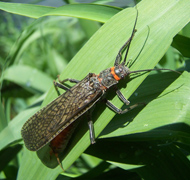
The salmonfly hatch begins a month before we see the first flying adult insects. Large armor plated nymphs begin an upstream migration. When the river's temperature reaches 53 degrees, the nymphs crawl from the river onto the bank side riparian to begin their hatch. Usually taking place in the middle of the night, the nymphs split open their exoskeletons and crawl out with a fresh pair of wings.
After drying out their fragile wings, the stoneflies begin scurrying the banks, searching for a mate (or five). The males typically do the most wandering around. This is obvious when you handle stoneflies of each gender. Males are smaller than females, and are much more active.
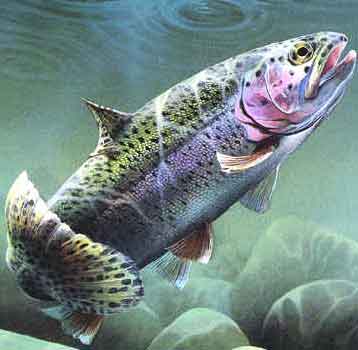
The salmonflies get all of the attention, but an even larger hatch of golden stoneflies occurs simultaneously with the salmonflies, with several weeks of overlap. Golden stoneflies are only slightly smaller than the salmonflies, and more of a golden brown color. In fact, when both species are present, Deschutes Redsides actually prefer the golden stones!
 As adults salmonflies are more lethargic than golden stoneflies. Even the hyperactive males are mellow compared to the small size eight male golden stones. During the day time the wind tends to blow stiff in the canyon, knocking bugs loose that aren't secured to the riparian. Since the small golden stone males are by far the most active, trout tend to key on them during the day time.
During their egg laying cycle (ovipositing) female salmonflies take flight in the low light of dusk. They fill the sky, eventually hovering over the river's surface dropping eggs into the river mid flight. Occasionally they miscalculate their flight path and crash into the river with a splat. Female golden stoneflies follow the same routine as their larger cousins, only their abdomens have to actually make contact with the water to release eggs. When each golden stonefly touches the water, many more of them become trapped in the surface film than the larger slamonflies, making them more available to the trout.
Although golden stoneflies work better under a more broad variety of conditions and stretches of river, it is important to be prepared with several patterns and sizes of both golden stones and salmonflies. A general rule of thumb on the Deschutes is the further downstream from Warm Springs you fish, the fewer salmonflies and more golden stones you will encounter.
Join us for a three or four day overnight float during the famous salmonfly hatch. We will take you away from the beaten path and show you hungry trout. This is the quintessential Deschutes River fishing trip. Not just for the fisherman, but the whole family as well. Ask about our whitewater rafting options for the family to enjoy while you experience some of the West's meanest 'rainbow trout.
Soneflies |
|
Stoneflies in-stock, no sales tax - $50 orders ship free in USA. |

|
|
Dry Flies to Match the Hatches. New Patterns |
| Salmon Fly Hatch Kit | |
| Little Stones | |
| Realistic Big Stones | |
| Clark Stones | |
| Traditional Big Stones |

 |
In our region, stone flies hatch from January through August. There are at least two dozen species which are important in the adult stage to the trout angler. These range between the tiny Winter Blacks (3/8") to the giant Salmon Fly (over 2"). The Salmon fly hatch on Oregon's Deschutes in May/June, is arguably the best dry fly fishing the Pacific Northwest has to offer. The hatch starts at the mouth of the river in the first week of May. By May 25th there are usually a few Salmon Flies at Warm Springs. The first week in June is peak for the best fifty miles, between Maupin and Warm Springs. The hatch trickles off through June and there are scattered salmon flies around Pelton Dam most |
| years until nearly the first of July. The so-called hatch occurs when the nymphs crawl out of the water. The nymphs will usually seek out tree trunks or other vegetation or any solid but porous structure where the claws of the nymphal feet will stay fastened securely so emergence of the adult insect can progress with out interruption. Since this hatch happens on land, it is of small importance to fishing in comparison to may fly or caddis hatches that happen at the surface of water. Most of the actual "hatching" happens at night or early in the morning. |
|

 |
It can continue in daylight hours on cloud cover days or in deeply shaded areas. It is after the insects have hatched and have become active adults that they become important as trout food. During the night adult salmon flies become inactive. Their favorite places to rest or mate is in the streamside vegetation. Much of this vegetation over hangs the water. In the mid to late morning as the air temperatures rise, the adults become active and start crawling and flying around. They are clumsy and some will inevitably land in the water. It is at the river's edge that the best dry fly action usually occurs. Since the majority of the salmon flies are concentrated around the water, the |
| trout will take up stations under overhanging trees and grass. Casting your salmon fly imitation up stream under the over hanging trees has always been one of the secrets to successfully fishing the hatch. During the warm part of the day there will be a fairly constant rain of fluttering and flopping bugs onto the water. Pin-point casting accuracy is much more important than delicate casts. Real salmon flies are heavy and |  |
|
hit the water hard. The perfect set-up is a medium fast action six weight rod, and a 6'-7' long leader tapered down to 3X. You need to be able to poke the fly under low hanging branches and through holes in the brush. In many ways fishing the salmon fly hatch has more in common with bass bugging that classic dry fly fishing. | |
| "big" hatch and disappear about the same time as the Salmon Flies. Golden Stones usually linger on for a while. They are replaced by Yellow Sallys which bright yellow and are size #14 to #16. |
Links to Information on Stoneflies |
The Fly Fishing Shop, Welches, OR
1 (800) 266- 3971
Salmon Fly Hatch photos by: Mark Bachmann (Deschutes River) - all rights reserved.
|
The Fly Fishing Shop Recommends these companies. |
